
Why Louisiana

Louisiana and the Infrastructure Opportunity
Louisiana is in the early stages of a generational build-out in new infrastructure. More than $81.6 billion in direct investment has been announced or is underway. Projects are concentrated in the northwest, but the economic impact — through supply chain activity, tax revenues, and workforce development — reaches across the state.
Louisiana is a leader in this field because of its competitive geography, available land, and smart policy decisions. We also know that communities and local governments need resources and answers to understand what these investments mean for them.


The Benefits Are Real
- Tax revenue for local governments and schools. Data center facilities generate property tax revenue that flows directly to local governments and school districts. Louisiana's investment framework is designed to ensure that parishes — not just the state — capture a share of the economic benefit.
- Infrastructure investment paid for by developers. Data center projects fund significant infrastructure upgrades — power, fiber, roads, and water systems — as conditions of development. These costs are borne by developers, not passed to Louisiana taxpayers.
- Construction employment for Louisiana's trades. More than 11,750 workers are expected at peak construction across Louisiana's data center projects. These are jobs for electricians, ironworkers, pipefitters, and other skilled tradespeople (Louisiana Economic Development).
- Long-term economic stability. Data centers create durable economic anchors. The 2,025+ direct operations jobs they support are permanent, high-paying positions. The 4,098+ indirect jobs they generate through supply chain and service sector activity spread the economic benefit into the broader community (Louisiana Economic Development).
How Louisiana Oversees This
- Act 730 (2024), passed with a unanimous Senate vote, establishes the conditions under which data center investment qualifies for state incentives, including minimum investment thresholds and verified job creation requirements. Facilities that do not meet these commitments lose access to state support.
- The Louisiana Department of Environmental Quality regulates air quality, water discharge, and environmental compliance for industrial facilities, including data centers, through a permitting process that includes public comment periods.
- Local parish governments retain authority over land use decisions through permitting processes that require public notice and community input. (Louisiana Open Meetings Law, La. R.S. 42:14(D))
Myth vs. Fact in Louisiana
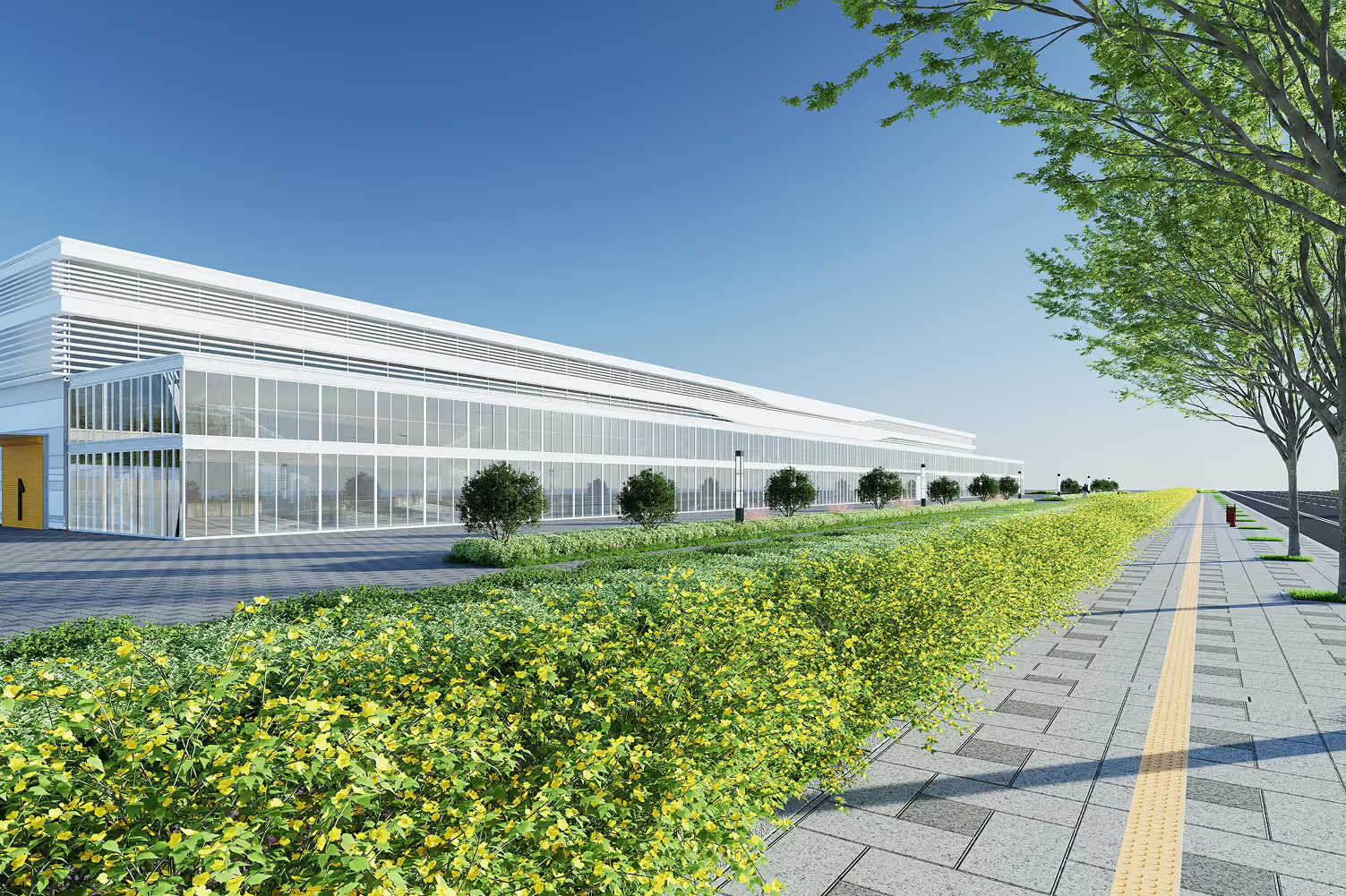
Fact: Data centers are categorically different from the petrochemical and refining facilities associated with Cancer Alley. Inside the facility, there is no fuel combustion, no chemical processing, and no hazardous emissions during normal operations. A data center's on-site environmental footprint, governed by Louisiana DEQ permitting, is not comparable to industrial manufacturing or refining. It is a different type of facility, regulated under a different framework, with a fundamentally different emissions profile.
Fact: Act 730 requires minimum investment thresholds and creates a structured accountability framework. Companies must qualify for the exemption, and the benefits are tied to verified investment levels, including a minimum of $200 million in new capital investment and 50 new direct permanent jobs (DMA). The trade is explicit: Louisiana foregoes a portion of short-term sales tax revenue on equipment and construction in exchange for capital investment, property tax revenues, operations jobs, and supply chain activity that pays dividends for decades. The Louisiana legislature passed Act 730 with bipartisan support because elected officials on both sides determined that the investment benefits are worth it for Louisiana communities (CREDA).
Data center construction typically spans two to three years per building, and major campuses often involve multiple phases of development that extend a decade or more. For skilled tradespeople, that is not a temporary job: it is a career. At peak construction, Louisiana data center projects are expected to employ more than 11,750 workers across the full range of skilled trades (Louisiana Economic Development).
And when construction is complete, the work continues. Data centers require full-time, permanent operations staff, including engineers, technicians, security, and facilities personnel, for the life of the facility, which typically runs 20 to 30 years. More than 2,025 direct operations jobs are projected statewide, with an additional 4,098 indirect jobs created through supply chain and service sector activity (Louisiana Economic Development). Property tax revenue flows to local governments and school districts throughout that entire period.
Fact: Electricity rates are set by state regulators through a public process. Utility companies must file rate requests with the Louisiana Public Service Commission, and those requests are subject to public review and approval. No rate increase can take effect without regulatory review and an opportunity for public comment. (LPSC)
Research also shows data centers help spread fixed grid costs across a larger customer base, which can lower bills for everyone. One study found that a doubling of a state’s data center capacity was associated with a roughly 3.5% decrease in residential electricity rates between 2015 and 2024. Entergy’s Fair Share Pledge – which requires data center customers to pay 100% of their own grid connect costs – projects $7 billion in total customer savings across Louisiana, Arkansas, and Mississippi over the next 20 years.
Fact: The economic benefits of data center investment flow through multiple channels. Property taxes go directly to local governments and school boards, and communities hosting these facilities are already seeing the results: parishes across North Louisiana have reported surging local tax collections that have funded record pay increases and bonuses for teachers and other public sector workers (GovTech, June 2026; Shreveport-Bossier City Advocate, June 2026). Construction employment circulates through local businesses and households. Operations jobs create stable, long-term income in communities that host these facilities. Louisiana Economic Development's statewide data shows more than $81.6 billion in investment creating more than 6,100 direct and indirect jobs, that is community-level economic impact, not just corporate balance sheet entries (Louisiana Economic Development).
Fact: The cloud is physical. Every email, medical record, and financial transaction lives on a server in a specific building in a specific place (Congressional Research Service, January 2026). Where that building is determines whose laws govern it and who can access it. When this infrastructure is built here — in Louisiana, by Louisiana workers — it stays under American law. That is not just good for Louisiana's economy. It is good for the country.
Glossary
Closed-loop cooling system
A cooling system in which the same water circulates continuously through the facility rather than being drawn from and discharged back into local water supplies. Closed-loop systems are significantly more water-efficient than open systems, though facilities using evaporative cooling will require periodic replenishment as a portion of water is lost to evaporation during the cooling process. Most modern data centers use closed-loop or air-cooled systems.
Data center
A building that houses computer servers, networking equipment, and the power and cooling systems that keep them running. Data centers are the physical infrastructure behind digital services — storing files, processing transactions, routing communications, and supporting the systems that hospitals, emergency services, banks, and businesses depend on every day.
Direct job
A permanent position created and employed directly by the data center facility — engineers, technicians, operations staff, and security personnel who work on-site.
Indirect job
A job created in the surrounding economy as a result of a data center's presence — in supply chain businesses, local services, construction trades, and other sectors that support the facility and its workforce.
Incentive / tax exemption
A reduction in a specific category of taxes — typically sales tax on equipment and construction materials — offered by a state or local government to attract qualifying investment. Incentive programs require minimum investment levels and job creation thresholds; facilities still pay property taxes, income taxes, and other local taxes from the first day of operation. In Louisiana, Act 730 (2024) establishes the specific investment and job creation thresholds that qualifying data center projects must meet to access state incentives.
Large-load customer
A utility customer that consumes electricity at a significantly higher volume than residential or small commercial customers. Data centers are classified as large-load customers in most states. Many states have specific rate structures that require large-load customers to pay their proportional share of any grid infrastructure upgrades they trigger.
Load growth
An increase in total electricity demand on a utility's grid. Load growth can be driven by population growth, electrification of homes and vehicles, manufacturing expansion, and large-load customers like data centers. Research has found that when load growth is planned for, it can lower per-unit electricity costs by spreading fixed grid costs across more customers.
Performance agreement
A legally binding contract between a developer and a government body — typically a state economic development agency or local government — that ties investment commitments, job creation, and community benefits to enforceable milestones and financial penalties for non-compliance. Act 730 requires qualifying Louisiana data center projects to meet verified investment and employment thresholds as a condition of receiving state incentives.
Ratepayer
A residential or business customer who pays for electricity, water, or other utility services. Ratepayer protection refers to regulatory frameworks that prevent the costs of large-load infrastructure from being passed to ordinary utility customers.
Server
A computer designed to process and store data continuously, running the software that powers websites, applications, databases, and digital communications. Data centers house thousands to hundreds of thousands of servers depending on their size and purpose.